
BLOG
Is Instagram ruined?
In episode 160 of the Everything is Marketing podcast, I tackled the idea that marketers are freaked out that the change will hurt your brand. I am just not sold that this will happen in fact as with most change, this will force brands to get better at spending smarter money and creating killer content.
It is no longer a strategy to whine when a social platform turns the corner and forces brands to spend in order to reach the users on that platform. When brands or marketers pretend that facebook, Instagram, Twitter, or Pinterest are different than television, radio, newspapers, billboards, or magazines they aren’t respecting the reach of the social space. You don’t expect to get radio spots for free, so why would you think that your facebook post should be free and still reach the audience on the platform — you shouldn’t so stop.
Take a listen to the podcast and give me your feedback.
To binge or not to binge
Friday Netflix released the second season of Daredevil and I had the rare opportunity to watch the entire series. This is such a rare occurrence that the last time I was able to do that was last year when I was on assignment in New York away from my family. Normally I watch an episode here or there especially if I really like something so that I have the chance to really enjoy the story allowing it to bloom like a fine tea.
This past weekend I binged 13 episodes of a single show before the sun came up on Monday morning and when I came into the office this week I noticed the fallacy of binging a show - most people don't have that sort of time. In this age of disruption and fragmentation of media people consume what they want, when they want it. This is great for the consumer when it comes to choice it is terrible when it comes to the community of media.
Ten years ago you would hear media pundits and marketers talk about creating "water-cooler moments" which were events in time where people would gather around the coffee maker or actual water cooler and talk about what they all saw on TV last night. This doesn't happen anymore, more precisely it does but in different places like Twitter, facebook, and Snapchat. The problem is when you are watching a show where every episode is out all at once, you lose the ability to share the "holy shit" moments with your friends because you have no idea where they are in the season - or if they have even started yet.
Which is the point of this type of media, the community that surrounds it. I often use (spoiler incoming) the moment when Frank kills Zoe in House of Cards. If that moment was consumed in a more traditional way can you imagine what social media would have looked like? The earned and shared media for that shared moment in time would have been profound. As it is, it is a fragmented experience where some people watched the weekend it was released, others in the month or months following, and even some this week as they try to catch up to watch season 4 that came out in March.
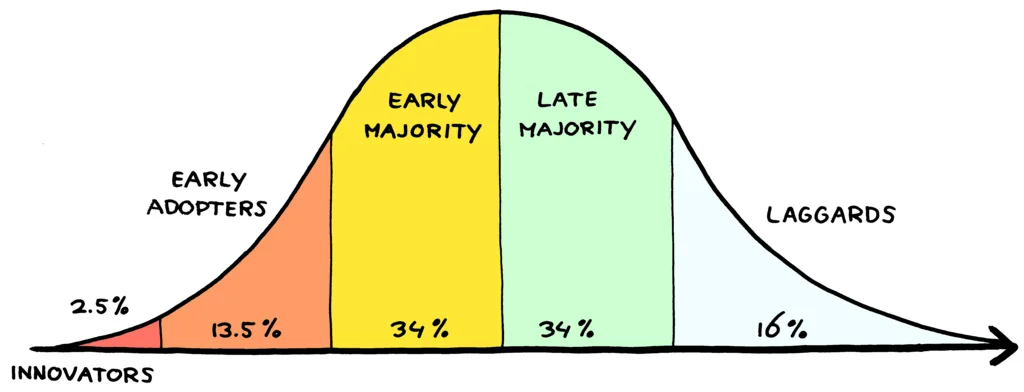
Common thinking on this is that the Netflix model is good for TV because it gives the choice to the consumer and in a way that is correct. But what it also does is strip away the community aspect of the content and places it on an innovation curve which might stifle some of its growth in the long term.
Think about Star Wars this past December. The innovators and early adopters vowed not to share anything on social media in regards to spoilers for one week, after that you were on your own. This was an entire community deciding that the content was so good they wanted everyone to enjoy it in its purest form in a theater with others who would be equally surprised. When there is a shared experience between humans psychologists call it "flow" and it most certainly can happen in the digital as well as the physical space. The caveat is that the people reaching flow have to be doing or consuming the same thing at the same time in order to get synced up. It doesn't work when the people are not in the same chronology.
Everything in moderation my friends. No binging of sex, food, drugs, shopping, gambling, working out, sleeping, studying, and maybe we should think about adding shows to the list of things we want to consume in moderation for the sake of enjoying it on a much deeper level.
A single vote
Today in Michigan is one of two chances for you to:
Educate
Empower
Lead
Disrupt
Rage
Complain
Ignite change
Fight
Follow
Make waves
Build
Tear down
Be a part of the future
Do your duty
Game the system
Communicate
Argue
Leap
But you get to do none of these things today if you don't show up.
When the T-rex dies, nobody wins.

In the wild, when the apex predators disappear logic would dictate that it would be better for the animals lower on the food chain. The problem is that once the top of the food chain disappears the balance is gone and mass disruption happens.
In business, there are T-rexes, sharks, dragons, griffins, and other powerful beasts that rule the status quo. The may stomp around, consume competitors, growl, and gnash teeth which can intimidate people, make them uncomfortable, or make them hide from the work. Late at night those individuals may even wish the T-rex would get fired or be thrown out because it would make work easier, the thing is they are wrong.
Because what an apex predator does is keep other apex predators away. When they are gone a new apex predator can move in and likely have different priority or even a different diet of things they like to consume violently. You are seeing this happen at this moment in politics, in media, in transportation, in city infrastructure, and in heath care. When the established gets removed, change happens and in many cases that change is not good for those who are left in those ecosystems.
That said, change can benefit you, if you are prepared for it. If I might mix metaphors for a second when you are surfing or snowboarding you have a better chance to have a great run or grab a great wave if you are paying attention enough to change when the change happens. The problem when an apex predator goes is that those who are left just stand around paralyzed until something else takes over. This is not unlike the scene in Minions where they follow and kill evil boss after evil boss, moving from the next thing to the next thing mindlessly repeating that until unltimately the industry is gone.
When Netflix ate Blockbuster video stores did not thrive, they became Redbox or abandon storefronts speckled throughout America. When Napster ate the music industry it was the final days of Rome for that industry. Yes, it has continued but never at the level it did before the internet came along.
If you are in an industry, a company, a co-op and the T-rex goes - be prepared to adapt, to change, to move, because your world is going to change regardless of if you react or not.