
BLOG
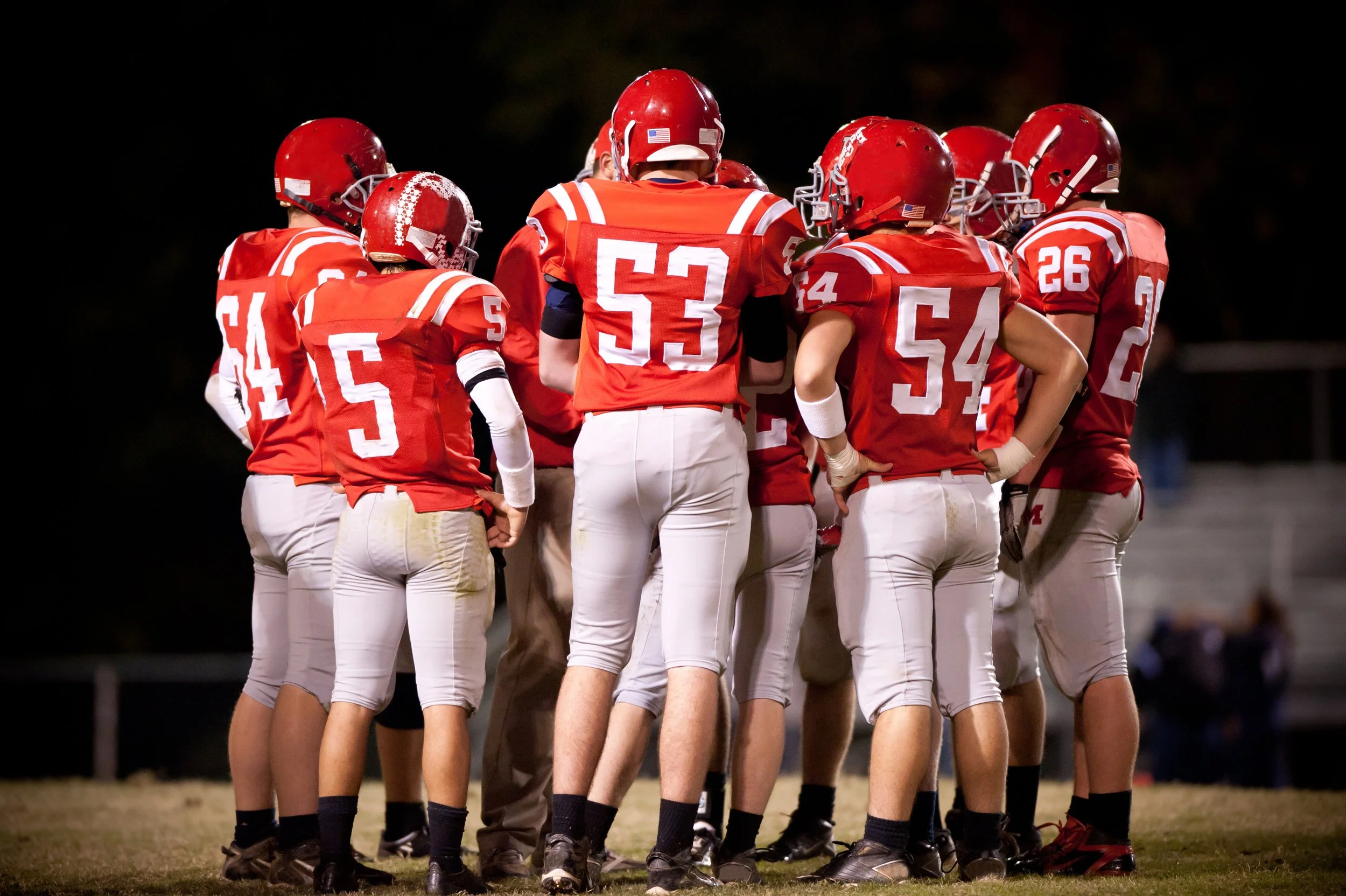
It Started Somewhere
Written by: Eric Hultgren
It started somewhere in the Midwest. A school millage failed, and a district couldn’t afford the things it needed. Nothing particularly surprising about that.
Then another one failed. And another.
Eventually, districts stopped putting them on the ballot. Taxpayers had made themselves clear. They wanted lower taxes, better schools, and a state championship. They were willing to pay for approximately none of those things.
They did, however, vote to have a portion of their tax refunds deposited directly into their Kalshi accounts.
The schools got desperate. Someone called it innovation.
They started producing Trapper Keepers. Yes, those Trapper Keepers. Except now Hollywood studios and other brands paid to put their characters on the covers. Every kid got one, starting in kindergarten.
Inside were little digital screens playing ads like the ones we used to tolerate at gas pumps. Except you couldn’t drive away from these. You had to take yours to algebra.
At first, it was breakfast cereal, chips, Nerds Gummy Clusters. The kinds of things kids already asked their parents to buy.
The district called it a partnership. Parents called it better than another tax increase. The company selling the ads called it access to an otherwise difficult-to-reach audience.
Everybody got something.
Except the money wasn’t enough to support the football team.
It took us a long time to admit this, but the football team was the part of the school we were most determined to save. We could share an art teacher with another district. The librarian could come on Tuesdays. Nobody suggested sharing a quarterback.
So the schools upped the ante.
As the kids got older, the ads grew up with them.
Vapes. Condoms. Plan B. ADHD medications. GLP-1s.
Whatever you were going through, somebody had bought the space next to your homework to sell you something for it.
It turns out that getting in front of a customer before they’ve figured out who they are is worth a lot of money. Companies had spent decades trying to get that kind of access to kids.
Now the school charged the device overnight.
Looking back, it seems obvious that this was a terrible idea. Surely there was a point when somebody should have said something.
There were plenty.
When reading scores fell and the district’s annual report led with the team’s playoff run.
When the guidance counselor position went unfilled, but the school hired someone to manage its brand partnerships.
When parents could pay to turn off the ads, and we all agreed that counted as a choice.
When the credit card companies disappeared because we were buying groceries with our Kalshi accounts.
But each of those things arrived with an explanation. A budget shortfall. A convenience. A temporary solution. Something we could revisit next year.
And instead of noticing where it was all going, we argued.
We argued over who you voted for. We argued over which football team you cheered for. We argued over what books belonged in the library while the library’s hours got cut again.
Everything had become a choice between two sides. You either were or you weren’t. You were with us or against us.
The human condition has never fit particularly well into those choices, but it was easy to turn into a national pasttime.
Ten years later, your child is carrying around an advertisement disguised as a study guide, and you finally look at it long enough to wonder:
“How did we get here?”
Then the crowd gets loud.
You look up.
Touchdown.
Running Up That Hill

Written by: Eric Hultgren
I have a huge project coming up in November that will take me around the world. In order to prep for this trip, I have also been forcing my body into shape, which at 52 is far harder than it used to be.
I have been running at least two miles a day for the past few months, and on one of my routes is a decent hill at the end of the run. When I started training, I HATED that hill. But as I was running yesterday, it dawned on me that this is now my favorite part of the route.
I love the test at the end of the run: Do you have anything left to push up this hill? Should you?
So, with a smile on my face, I push, I curse, and then eventually I crest the hill into the cool down.
There is a Buddhist saying that has been misquoted, likely forever, that says, “All life is suffering.” The word the Buddha used was Dukkha, from a long-dead language, and “suffering” is the word we have put in its place.
While suffering is not a perfect translation, it explains part of Dukkha, but not all of it. It might be closer to say that the unenlightened experience life as suffering, but even that isn’t perfect, since enlightenment isn’t necessarily a permanent state.
While I am clearly not an expert in Buddhism, I can say that there is power in leaning into the hills.
Which is funny because, after I had been running for a few months, my youngest asked me, “Dad, do you like running?”
To which I quipped, “No, not particularly.”
He looked confused. “Then why do it?”
Because I like the feeling from running, not the feeling of running.
To me, that feels like a form of enlightenment.
The End of the Bronze Age
Last night I took my youngest to see The Odyssey in 70mm IMAX before it leaves today. Seeing it a second time, for me, is where the film really shines.
The first time, I was blown away and in shock at the scale, the story, and the technical prowess it took to pull the film off. The second time, I could appreciate it for the art that it is.
Watching the story unfold as Odysseus comes to terms with the understanding that he and his men are the marauding “people from the sea,” and that they alone have sent the world into chaos because of the blind ambition of Agamemnon, is a prescient statement on the timeline we currently inhabit.
A time when kindness and the act of welcoming strangers have given way to the age of the “other” and distrust of those who don’t look or sound like us. Zeus’s law has been broken by the audacity of man.
There was a moment at the end of the film where Penelope and Odysseus sail west to honor his men, chasing the fading sun, and Penelope turns to Odysseus and asks:
“Why will the stories only be sung?”
Odysseus responds:
“Because song will be all they have to remember those of us who could write.”
A line I didn’t clock the first time stunned me on a second watch.
We live in an era nearly devoid of all adventure—a world made of Nerf. Where machines arrive to think and write for us as we chase something we call efficiency.
The whole experience left me wondering if modern man’s age of Bronze is also collapsing because we, too, lived in a “world of palaces and trade, language, blind to its beauty, until we broke it.”
That said, much like the ending of the film, I also feel “a new dawn will break over the darkened world, when our mistakes will once again be forgotten.”
That is a day I certainly look forward to.
Feeling Analog
I am in a very analog mode as of late, the notifications of modernity giving way to tactile ghosts from another time.
It started before COVID, when I was creating dad jokes for my kids’ lunches. Each kid got a joke, there were no repeats, and it was written on a typewriter. We are powering through the sixth year of that, and now the jokes are hand-painted with watercolors instead of pen and ink or the typewriter.