
BLOG
A Book, a Taco, and a Beer

I'm reading Ezra Klein's latest book, "Abundance," which explores governing from a posture of “enough” rather than our current approach based on scarcity and fear.
Last week, over tacos with a friend, we discussed Ryan Coogler's film "Sinners." Neither of us had watched beyond the first trailer, protecting ourselves from spoilers.
Trailers have evolved dramatically since their 1913 inception by Nils Granlund. By the 1960s, directors like Hitchcock and Kubrick were crafting their own. Then "Jaws" (1978) transformed the industry entirely.
Today's trailers often serve as plot summaries to avoid false advertising claims. In 2013, the National Picture Association attempted to limit trailers to two minutes, but studios resisted, claiming it would hurt business.
They were defending what I'm fighting against.
Saturday, sharing beers with my favorite bookseller, we debated the universe. He sought comprehensive understanding; I advocated for magic and wonder. We reached no consensus, but I remain convinced: not knowing is more rewarding.
Modern culture increasingly eliminates surprise, smooths all edges, and provides immediate access to everything. Though the term "social media" dates back to Charles Cooley in 1897, our current reality of constant connectivity was perhaps inevitable.
But here's the question worth asking: Just because we can have answers to everything, should we?
Is there a Noom for media consumption - asking for a friend?
The Patience of Champions
The Patience of Champions
Golf has never interested me. But the Masters? That's different. The stories, the heroics, even the pimento cheese sandwiches. I'm captivated.
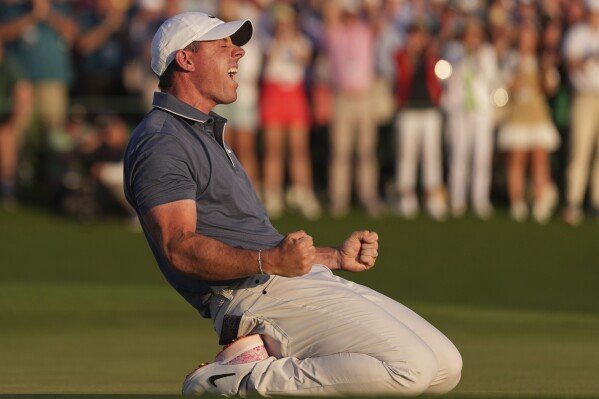
Yesterday's 89th Masters showed us something remarkable. Rory McIlroy became the first player in a quarter-century to complete the grand slam. But he nearly didn't.
McIlroy entered Augusta carrying an 11-year major drought—nearly 4,000 days of "almost" and "not quite." In Thursday's opening round, he double-bogeyed 15 and 17, falling seven shots behind Justin Rose. Only two players in history (Nick Faldo and Tiger Woods) have overcome such a deficit at Augusta.
By Sunday, McIlroy had engineered a stunning reversal, building a five-stroke lead—only to squander it entirely and face a playoff on the very hole that had just cost him the win.
Think about that timeline: from hopeless, to commanding, to heartbreak, to redemption. All within 72 holes.
The thing about persistence is that it's rarely dramatic in real time. It's showing up when the cameras aren't rolling. It's believing when the evidence suggests otherwise.
Most of us quit at the inflection point—right before the breakthrough. We hear "no" in meetings, watch relationships dissolve, see projects falter, and decide: enough.
What would our work look like if we persisted through a decade of setbacks? There's a hairline fracture between belief and delusion, a vast canyon between success and failure. Navigating both simultaneously requires something increasingly rare.
Perhaps that's why yesterday felt so special.
The Hot Dog Lesson

Webster defines the hot dog as "a frankfurter with a typically mild flavor that is heated and served in a long split roll."
But what makes the best hot dog?
In Reykjavik, Iceland, there's a hot dog stand called Baejarins Beztu Pylsur. It's been operating since 1937. On busy days, their three locations serve 1,000 hot dogs.
The secret? Two things:
First, their pylsur are made differently—primarily lamb, with some pork and beef.
Second, their system. Just two people work the stand, and they're paid per hot dog, not per hour. The incentive aligns with both speed and service.
Compare this to the Starbucks "Pick-up" location near my house. No seating. Mobile orders encouraged. It should be fast and accurate.
Instead, it's the slowest coffee shop I've ever visited. Orders take 18-22 minutes. The staff seems disengaged.
The difference isn't complexity. Cold drinks now make up 75% of Starbucks sales.
The difference is alignment.
When your systems, incentives, and purpose all point in the same direction, magic happens.
Even with something as simple as a hot dog.
The Strategic Villain: How Brands Can Time Their Heel Turn

Something happened this week that transcended wrestling and infiltrated the cultural zeitgeist.
John Cena, the ultimate good guy for 22 years, turned heel.
In wrestling terms, that means the hero became the villain. The man who granted 650 Make-A-Wish dreams—more than anyone in history—stunned the world by betraying everything he stood for.
And everyone is talking about it.
Cultural earthquakes don't happen by accident.
In 1996, Hulk Hogan did the same thing. His heel turn was so shocking a fan tried to climb into the ring to stop it. That moment didn't just change wrestling—it signaled a cultural shift that echoed through entertainment, reflecting Gen X's anti-establishment ethos that would define the late 90s.
Great brands understand cultural rhythm. They feel the beats changing before others do.
You have three choices with culture:
Drive it (be the creator)
Ride along with it (join the community)
Suck the tailpipe (be the insurance agency doing last month's dance trend)
The question isn't whether to follow culture but whether you can anticipate its turn.
Henry Ford didn't build faster horses. Rick Rubin doesn't play instruments, but he revolutionized music by understanding its pulse.
Cena's heel turn resonates because it matches our collective mood.
We're at an inflection point where many feel they've been cheering for the wrong thing, or perhaps secretly want permission to embrace their darker impulses.
The best brands have an internal metronome that prevents them from rushing ahead of culture or dragging behind it. They don't just react to the beat—they anticipate the change in tempo.
When you understand cultural timing, you don't need to shout for attention.
Sometimes, the most powerful move is the unexpected turn.
Are you willing to make yours?
That one take shot in Daredevil Born Again
@erichultgren This description of the fight in episode one of Daredevil Born Again is awesome
♬ original sound - Eric Hultgren